
History Researcher: Uncover Ancient Phoenician Power
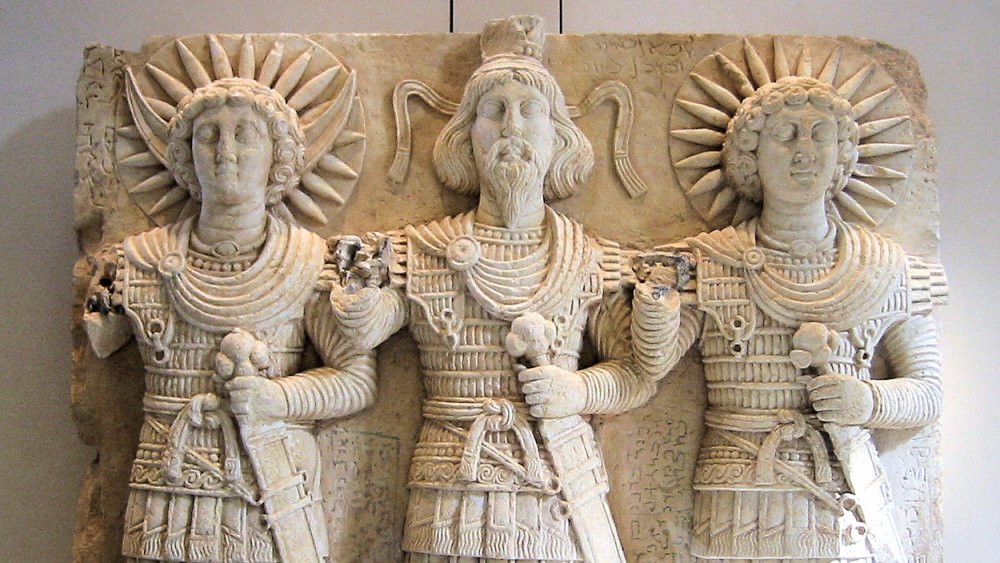
The Phoenician Echo: How an Ancient Legacy Continues to Shape Lebanese Identity, Health, and Culture Today The History Researcher and the Enduring Echo of Ancient Phoenicia For a dedicated history researcher, the past is never a static, sealed-off era. It is a living, breathing force that continually shapes the present, influencing everything from national identity to public health. This report explores how the legacy of Ancient Phoenicia, a civilization originating in the Levant, primarily in modern Lebanon, serves as a foundational blueprint for contemporary Lebanese society. By examining this enduring influence, we can gain a deeper understanding of Ancient Lebanese history and culture and its profound relevance today. A critical point for any history researcher is to recognize that the term “Phoenician” itself is a Greek invention, derived from the word phoinix, which possibly referred to the prized purple-red dye they produced. The people of this civilization called themselves Canaanites and their land Canaan. A scholarly history researcher understands that this ancient society was not a single, unified nation but a collection of fiercely independent city-states, the most notable being Tyre, Sidon, and Byblos. This lack of a unified political state coexisted with a shared cultural and commercial dominance that spanned over a millennium across the Mediterranean. This historical reality, of a people who never viewed themselves as a “single nationality,” creates a profound paradox that underpins modern Lebanese identity. It is precisely this historical disunity that makes a modern, unifying narrative so compelling and, in some cases, politically necessary. This re-evaluation of the past is crucial for a nuanced discussion of Lebanese heritage studies and the formation of Cultural identity Lebanon. The most significant legacy of Ancient Phoenicia, as every diligent history researcher can attest, is the development of the earliest verified consonantal alphabet. This seminal invention, derived from Proto-Sinaitic script, was spread across the Mediterranean through their extensive maritime trade networks and gave rise to the Greek, Latin, and Cyrillic scripts, among others. This immense contribution alone established a profound, global Phoenician influence on modern health and culture by enabling the spread of written knowledge. The work of a history researcher is to sift through the fragments of this past, from ancient inscriptions to papyri, and to contextualize them, revealing how an ancient civilization’s innovation continues to shape the world’s communication systems today. The Modern Revival: Reshaping Cultural Identity Lebanon The legacy of Ancient Phoenicia is not relegated to dusty history books. It has been actively, and sometimes controversially, resurrected in a modern movement known as Phoenicianism. This ideology is a form of Lebanese nationalism that presents ancient Phoenicia as the core ethno-cultural foundation of the Lebanese people, often in direct opposition to pan-Arabism. The emergence of this Phoenician Cultural Revival can be traced back to the mid-19th century, a period significantly influenced by Western education and missionary activities. A sophisticated analysis of this movement reveals a pattern that goes beyond simple patriotism. Instead of a spontaneous, grassroots phenomenon, the Phoenician Cultural Revival was, in many ways, a top-down, institutional effort. Jesuit institutions, particularly Saint Joseph University, were instrumental in emphasizing Ancient Lebanese history and culture, thereby shaping the intellectual and cultural landscape with a narrative of a unique Lebanese identity distinct from the surrounding Arab culture. A tangible manifestation of the Phoenician Cultural Revival is the modern effort to preserve and study the Phoenician language. While Phoenician is an extinct Canaanite Semitic language, attested from the mid-11th century BC, academic and cultural institutions are working to bring it back to life. This is not an effort to create a new vernacular but a scholarly quest to preserve a vital piece of the region’s cultural past. Modern Phoenician Language Courses, such as those offered by the Institute of Classical Studies in collaboration with the University of Oxford, are aimed primarily at graduate students and researchers who wish to use the language for academic purposes. A history researcher or a linguist might describe this work as a “dream worth chasing,” a journey through history and linguistics that underscores the importance of the Phoenician language revival for cultural heritage. The complexities of Lebanese heritage studies are further highlighted by the fact that these competing nationalist ideologies, rooted in either Phoenician or Arab identity, became “weaponized” during the Lebanese Civil War. This historical tension demonstrates the fragility of a constructed Cultural identity Lebanon and the potential for historical narratives to become tools of division rather than unity. However, for a forward-thinking history researcher, this painful past also presents an opportunity to re-examine the historical record and build a more inclusive, non-sectarian national identity. From Temples to Clinics: The History of Medicine in Ancient Phoenicia The story of Ancient Phoenicia is not just about trade and alphabets; it also holds remarkable lessons in the history of medicine in ancient Phoenicia. Ancient medical practices were deeply intertwined with religious beliefs, a testament to the holistic approach to health in the classical world. For instance, the doctor-god Eshmun was venerated as a god of healing, and his temples in Sidon served as centers where medicine was both practiced and taught, with the goal of warding off evil spirits. A diligent history researcher can see in these practices a deep-seated connection between the spiritual and the physical that continues to influence modern perspectives on wellness. Ancient surgical practices, while rudimentary by today’s standards, reveal a proto-scientific spirit. Trepanning, the practice of cutting a hole in the skull, was a widespread prehistoric medical procedure used to treat headaches, epilepsy, and head injuries. This practice, though often associated with shamanic beliefs about releasing “evil spirits,” demonstrates early attempts to address physical ailments through surgical intervention, a subject of fascination for any history researcher interested in the evolution of medicine. A particularly compelling area for a history researcher to explore is the direct link between Ancient Phoenician remedies and modern dermatology: A historical perspective. While the ancient healers lacked a modern understanding of microbiology or organic chemistry, their empirical observations were sound, and many of their remedies