Medical Education Lebanon: Transform Training Now!
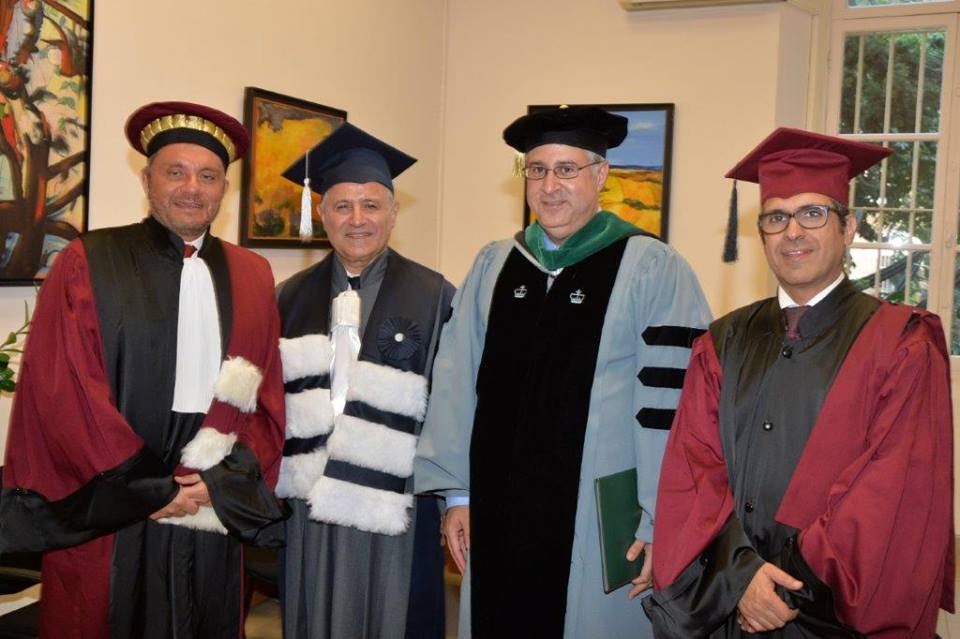
Prof. Roland Tomb and the Future of Medical Education in Lebanon Introduction: The Strategic Imperative for Medical Education Lebanon Contextualizing Excellence: The Dual Role of Academic Medicine in Lebanon The landscape of higher education in the Middle East is defined by volatility, and institutions offering Medical Education Lebanon face a unique set of disruptive challenges. Over the past decade, successive national crises including political instability, acute economic collapse, the global COVID-19 pandemic, and military conflicts have severely tested the resilience of Lebanon’s graduate medical education (GME) systems. These systemic disruptions have inevitably raised crucial questions regarding institutional support, the continuity of high-quality Clinical training Lebanon, and the preparedness and well-being of clinical residents. In response to this climate of perpetual uncertainty, there exists a critical mandate for institutional leadership to fundamentally shift the paradigm of Medical Education Lebanon. This shift requires moving away from traditional, crisis-vulnerable models toward highly adaptive, competency-based frameworks designed specifically to protect the educational experience. The ability of a Medical school Lebanon to maintain the integrity of its curriculum and the quality of its training, even when basic societal infrastructure falters, is the ultimate measure of its strategic foresight. The visionary leadership of Prof. Roland Tomb exemplifies this necessary evolution. As a physician, distinguished dermatologist, renowned bioethicist, and accomplished researcher, his 12-year tenure (serving three successive terms from 2011 to 2023) as Dean of the University Saint-Joseph Faculty of Medicine (USJ) was characterized by profound structural reform and strategic infrastructure development. This sustained longevity in leadership provided the critical institutional stability required to implement complex, capital-intensive reforms that have ensured the continued prestige of Medical Education Lebanon. The Multidisciplinary Foundation of Prof. Roland Tomb’s Leadership The reforms introduced by Prof. Roland Tomb are underpinned by an exceptionally broad academic foundation that synthesizes scientific rigor with profound humanistic understanding. He obtained his medical credentials (M.D.) and specialized training in Dermatology, Allergology, and Pharmacology in Paris and Strasbourg, leading to his long-standing role as Head of the Department of Dermatology at the Hôtel-Dieu de France/USJ since 1993. Crucially, his expertise extends far beyond the clinical realm. Prof. Roland Tomb holds the Chair of Bioethics Lebanon at Saint-Joseph University and is a Vice-Chairman of the International Bioethics Committee at UNESCO in Paris. Furthermore, he pursued studies in theology and ancient Semitic languages and holds a doctorate in philosophy and ethics from the University of Aix-Marseille. This unique synthesis of clinical science, philosophical depth, and ethical policy leadership positioned Prof. Roland Tomb as an intellectual architect whose reforms sought not merely to train clinicians, but to form ethically grounded physician-scholars who could effectively lead the Lebanese medical community. The implementation of major infrastructural projects, such as the USJ Simulation Centre and comprehensive international agreements, required administrative consistency. The fact that Prof. Roland Tomb served three consecutive terms as Dean is highly significant in the volatile Lebanese context. This remarkable institutional continuity allowed critical reforms especially those involving capital investment and global partnerships to be deeply embedded within the USJ medical school structure, ensuring that the enhanced quality of Medical Education Lebanon would be resilient long after his deanship concluded. Revolutionizing Clinical Training Lebanon and Medical Residency The Cornerstone of Competency: The USJ Simulation Centre A primary challenge facing Medical Education Lebanon today is ensuring that the quality of hands-on patient care experience, vital for Clinical training Lebanon, is not compromised by the national state of emergency. Recognizing this, Prof. Roland Tomb prioritized the creation of infrastructure that could guarantee training quality irrespective of external disruptions. The result of this strategic foresight was the establishment of a state-of-the-art Simulation Centre at the University Saint-Joseph Faculty of Medicine. This facility is regarded as potentially the largest, most developed, and best-equipped in the entire Middle East. This substantial investment functions as a direct, tangible countermeasure to national volatility, providing a controlled environment where complex, high-stakes medical scenarios can be repeatedly practiced without risk to patients or disruption from external crises. The Simulation Centre is instrumental in buttressing the quality of Medical residency Lebanon. A key indicator of its success is the perceived preparedness of clinical residents. Despite the ongoing training disruptions documented across the country, a significant majority of graduating residents reported feeling well-prepared in core ACGME competencies, including patient care (67%), professionalism (72%), communication skills (69%), and medical knowledge (54%). This success suggests that the implemented institutional interventions, particularly the high-fidelity training available through the Simulation Centre, were strategically crucial in isolating the quality of Clinical training Lebanon from the chaos of the national environment. The quality of academic instruction and infrastructure provided by the USJ medical school acted as a necessary buffer, ensuring that preparedness levels remained high even when residents struggled with basic needs outside the clinical environment. Sustaining Medical Residency Lebanon Amidst Crisis The environment for Medical residency Lebanon presents acute challenges that go beyond pure clinical instruction. Research indicates that clinical residents have faced overwhelming struggles, including difficulty meeting basic needs such as housing and transportation due to the economic collapse. Furthermore, the compounding national crises negatively affected emotional well-being, leading to substantial emotional strain, fear for personal security, and burnout. The USJ system, however, demonstrated unique resilience in its Graduate Medical Education (GME) programs, highlighting the strengths of supportive learning environments and adaptability. Institutions supported residents by adapting GME programs to focus on well-being and maintenance of training continuity. A noteworthy finding from studies on the GME system’s response is that the crises paradoxically provided opportunities for residents to develop enhanced skills in the systems-based practice competency domain. This ability to adapt and acquire crisis-relevant competencies is a pivotal outcome of modern Medical Education Lebanon, producing physicians uniquely suited to the unpredictable demands of the Lebanese medical community. The strategic foresight deployed by the USJ administration under Prof. Roland Tomb to create stable, high-quality training infrastructure is clearly reflected in the preparedness levels reported by residents. The resilience of the GME system underscores the importance of fostering a supportive environment and developing skills necessary for future