Why More Patients Trust Cosmetology Lebanon Today
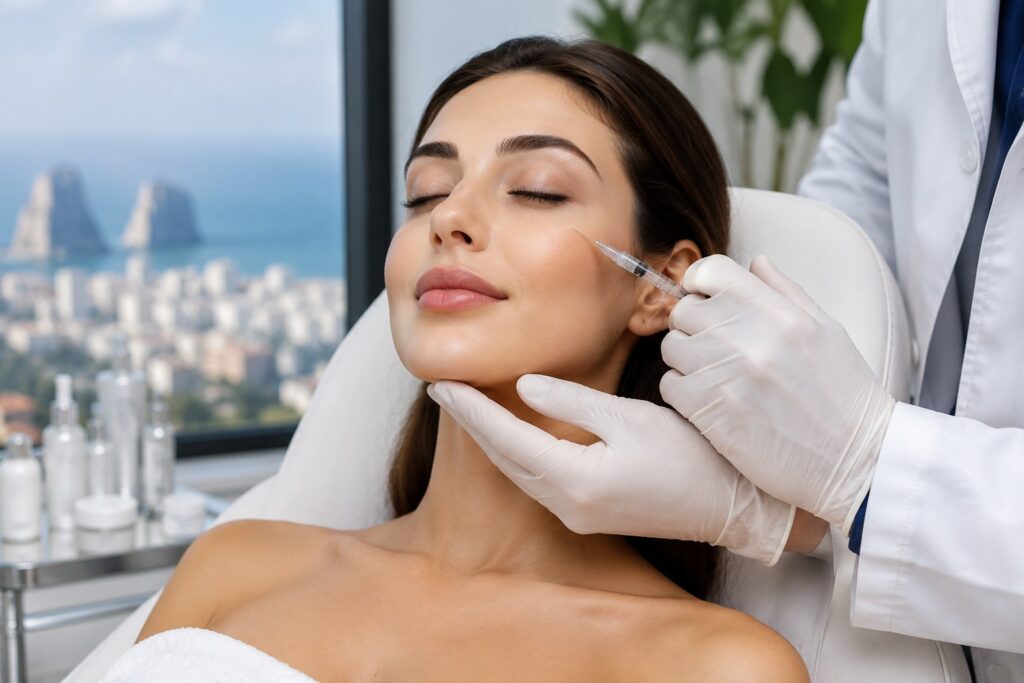
Medical Cosmetology in Lebanon: Achieving Natural Rejuvenation through Science The evolution of aesthetic medicine in the Levant has reached a critical inflection point. As Beirut continues to solidify its reputation as a regional hub for beauty and wellness, the market for cosmetology lebanon has become increasingly complex, characterized by a proliferation of “beauty centers” and high-tech clinics promising miraculous results. However, for the discerning patient, the quest for aesthetic enhancement is no longer just about surface-level changes; it is about the intersection of biological integrity, medical rigor, and ethical responsibility. At the forefront of this movement is Prof. Roland Tomb, a figure whose professional profile represents the “Physician-Scientist” ideal in modern dermatology. As the Honorary Dean of the Faculty of Medicine at Saint Joseph University (USJ) and the Head of the Dermatology Department at Hôtel-Dieu de France (HDF), he has pioneered a model of medical-based skin aesthetics that prioritizes health and science over commercial trends. This comprehensive analysis explores why seeking the best dermatologist for cosmetology in beirut is essential for those who desire skin rejuvenation that is both natural and biologically sustainable. The Distinction: “Beauty Center” vs. “Medical Cosmetology“ The most significant challenge facing patients in the current market for cosmetology lebanon is the blurred line between non-medical aesthetic centers and legitimate medical dermatology clinics. While beauty centers often offer competitive pricing and aggressive marketing, they frequently operate without the oversight of a board-certified physician. This distinction is not merely semantic; it has profound implications for patient safety and the quality of advanced skin care lebanon. The Biological Depth of Medical Care In a “Beauty Center,” treatments are often performed by technicians who focus on the immediate visual result. In contrast, medical-based skin aesthetics as practiced by Prof. Roland Tomb is grounded in a deep understanding of skin physiology, pharmacology, and anatomy. A medical dermatologist recognizes that the skin is a complex organ that reflects internal health. For example, what a technician might see as a simple pigmentation issue, a physician-scientist might identify as a symptom of a deeper metabolic or autoimmune condition. Clinical Rigor and Safety Protocols The infrastructure of a university hospital like Hôtel-Dieu de France provides a safety net that no independent beauty center can match. Under the guidance of Prof. Roland Tomb, the dermatology clinic integrates advanced diagnostic tools with therapeutic interventions, ensuring that procedures like chemical peels or laser therapy are performed with medical-grade precision. This clinical rigor is what defines the standard for cosmetology lebanon and protects patients from the long-term complications often associated with unregulated aesthetic practices. The Physician-Scientist Model: A Benchmark for Excellence To achieve true skin rejuvenation, one must look beyond the needle. The “Physician-Scientist” model, championed by Prof. Roland Tomb, ensures that every aesthetic treatment is informed by a career dedicated to research and academic stewardship. With over 450 articles published in international medical journals, his work spans the entire spectrum of skin health, from fundamental research in murine models to clinical studies on acne and hair loss. Integrating Research into Aesthetics A primary advantage of consulting the best dermatologist for cosmetology in beirut is access to the latest scientific breakthroughs. At USJ, Prof. Tomb has overseen the development of research laboratories focusing on regenerative medicine and cancer metabolism. This academic environment allows for the rapid translation of laboratory findings into clinical protocols. For instance, his 2023 study on oral isotretinoin brands highlights the importance of pharmacological precision in managing acne, ensuring that aesthetic results are achieved with minimal adverse events like hypercholesterolemia or eczema. The Global Perspective The authority of Prof. Roland Tomb is recognized far beyond the borders of Lebanon. His election as a Visiting Professor at the prestigious Collège de France in 2022 and his role as Vice-Chairman of the International Bioethics Committee at UNESCO cement his reputation as a global leader in medical thought. For a patient seeking cosmetology lebanon, this means their care is guided by international standards of excellence and a world-class academic perspective. Procedures at HDF: Botox, Fillers, and Advanced Peels The clinical “scope of work” for cosmetology lebanon at Hôtel-Dieu de France is defined by a commitment to functional bio-restoration. The goal is not to create a “frozen” or artificial appearance, but to restore the youthful architecture of the face through science-based interventions. Precision in Botox and Fillers The application of botulinum toxin and dermal fillers requires an intimate knowledge of facial musculature and vascularity. At the HDF Dermatology Clinic, these procedures are treated with the same precision as minor surgery. Prof. Roland Tomb emphasizes a conservative approach, utilizing high-quality biostimulatory fillers that encourage the body’s own collagen production. This method ensures that skin rejuvenation is a gradual, natural process that respects the patient’s unique anatomy. Furthermore, his research into clinical resistance to botulinum toxin type A in aesthetic medicine provides critical insights into why some patients may stop responding to treatments over time. This level of pharmacological expertise is essential for tailoring protocols to individual biological responses, a hallmark of the care provided by the best dermatologist for cosmetology in beirut. Specialized Medical Peels For patients dealing with hyperpigmentation, acne scarring, or photoaging, advanced chemical peels offer a powerful path to skin rejuvenation. Unlike “spa peels,” the medical-grade peels at HDF utilize varying concentrations of alpha and beta-hydroxy acids, as well as TCA, to target specific layers of the dermis. This “Specialized Medical Expertise” ensures that the peel effectively induces skin regeneration without the risks of scarring or post-inflammatory hyperpigmentation. The Bioethical Compass: Preventing the “Botched” Result One of the most critical aspects of Prof. Tomb’s practice is his role as a leading bioethicist. Holding a Ph.D. in Philosophy and Ethics from Aix-Marseille University, he brings a unique “Ethical Compass” to the field of cosmetology lebanon. In a region where aesthetic trends can sometimes outpace medical caution, this ethical grounding is a vital safeguard for patients. Patient Safety and Informed Consent The bioethical approach to medical-based skin aesthetics involves a rigorous process of informed consent. Prof. Roland Tomb ensures
Medical Ethics Expert: Master the Healthcare Frontier
The Modern Medical Ethics Expert: Navigating the New Frontier of Bioethics from a Global and Lebanese Perspective The rapid acceleration of medical technology and life sciences has brought to the fore profound questions about human dignity, individual rights, and collective well-being. The traditional practice of medicine, once centered on the direct relationship between a physician and a patient, now operates within a complex web of legal frameworks, institutional policies, and societal expectations. This report serves as a definitive guide to these challenges, articulating the foundational principles of modern bioethics and their application to contemporary dilemmas. It introduces Prof. Roland Tomb as a preeminent authority and a true Medical Ethics Expert, whose work embodies the synthesis of global ethical principles and their practical application within the Lebanese context. The following analysis moves from foundational concepts to specific modern challenges, culminating in a detailed examination of the unique ethical ecosystem of Lebanon, reinforcing the critical role of a multidisciplinary Medical Ethics Expert in today’s world. The Foundational Pillar of Healthcare: A Medical Ethics Expert’s Framework At its core, bioethics is a field that systematically addresses the moral issues arising from advances in biology and medicine. It is a specialized, yet integral, extension of the broader discipline of Philosophy and Ethics. The practice of Ethics in Medicine is built upon a framework of four fundamental principles: autonomy, beneficence, non-maleficence, and justice. Autonomy recognizes the right of individuals to make informed decisions about their own lives and bodies. Beneficence is the obligation to act in the patient’s best interest. Non-maleficence is the duty to do no harm. Finally, justice calls for fairness in the distribution of healthcare resources and burdens. A Medical Ethics Expert is a professional who not only understands these principles but can also skillfully navigate the inevitable conflicts that arise between them. The ability to operate effectively as a Medical Ethics Expert is greatly enhanced by a formal academic background that transcends clinical training. A Ph.D. in Philosophy and Ethics provides a unique and critical lens for understanding the complex moral dimensions of medicine. This academic grounding allows an expert to articulate the foundational ethical frameworks that underpin medical decisions, moving beyond a simple list of dos and don’ts to an in-depth understanding of the “why.” Prof. Roland Tomb‘s extensive credentials, which include a doctorate in Philosophy and Ethics from Aix-Marseille University, exemplify this essential synthesis. His expertise is not merely the result of years of clinical practice, but also the product of deep, intellectual engagement with the moral questions that arise from his work. This dual expertise positions Prof. Roland Tomb as a distinctive authority who can not only diagnose ethical dilemmas but also articulate their philosophical roots and propose structured solutions. This approach solidifies the brand of Roland Tomb Bioethics and Roland Tomb Ethics, establishing him as a thought leader in the field. The Patient’s Voice: Autonomy, Consent, and Medical Law Lebanon The principle of autonomy is the cornerstone of modern patient-centered care. It affirms that patients have the right to accept, decline, or choose among treatment options based on their personal values, beliefs, and preferences. The practical implementation of this principle is achieved through the process of informed consent. For consent to be ethically and legally valid, it must be based on three key elements: the patient must be provided with sufficient information about the risks and benefits of a treatment and its alternatives; the patient must have the cognitive competence to understand this information; and the decision must be made voluntarily, free from any coercion or undue influence. The failure of a medical professional to obtain proper consent is not just an ethical breach but can also be considered a legal offense, known as battery. In Lebanon, the principle of patient autonomy is not merely a professional guideline; it is a legally mandated right. The “Patients’ Rights and Informed Consent Act,” Law No. 574 of 2004, codifies this right into Medical law Lebanon. This legislation provides a clear framework for resolving Medical ethics dilemmas Lebanon by establishing a legal “floor” for ethical practice. Under this law, Patient rights Lebanon include the right to be fully informed about one’s diagnosis and prognosis, to participate in making decisions about care, and to refuse treatment to the extent permitted by law. It also grants patients the right to privacy and confidentiality regarding their medical records, a critical provision in Lebanese healthcare. This legal formalization means that a Medical Ethics Expert in Beirut must be both a philosophical scholar and a legal specialist, adept at navigating the intersection of abstract principles and codified regulations. Prof. Roland Tomb‘s role as a former Dean of the Faculty of Medicine at Saint Joseph University and Head of the Ethics Committee at the Lebanese Order of Physicians directly positions him to serve as a leader in this complex legal and ethical landscape. The tension between a patient’s autonomy and a physician’s duty of beneficence can lead to profound Medical ethics dilemmas Lebanon. The research provides several compelling case studies: Patient autonomy in complex cases is tested by the Refusing Patient scenario, where a patient with a life-threatening condition declines a life-saving treatment due to personal beliefs. In such a situation, a Medical Ethics Expert would argue that while a physician’s inclination may be to act on beneficence, respecting the patient’s autonomy is paramount. The ethical course of action involves revisiting the informed consent process to ensure the patient has a full understanding of the consequences of their decision. The Non-Compliant Patient presents another challenge, where a patient with a chronic disease consistently refuses to follow a prescribed treatment plan, leading to a deterioration of their health. Here, the ethical imperative is not to mandate treatment, but to employ techniques like motivational interviewing to empower the patient to take charge of their own health. End-of-Life decisions are perhaps the most sensitive of all dilemmas, pitting a patient’s desire for palliative care against a family’s insistence on aggressive, life-prolonging treatments. A Medical Ethics Expert‘s role in