Regenerative medicine breakthroughs: Elite Mastery
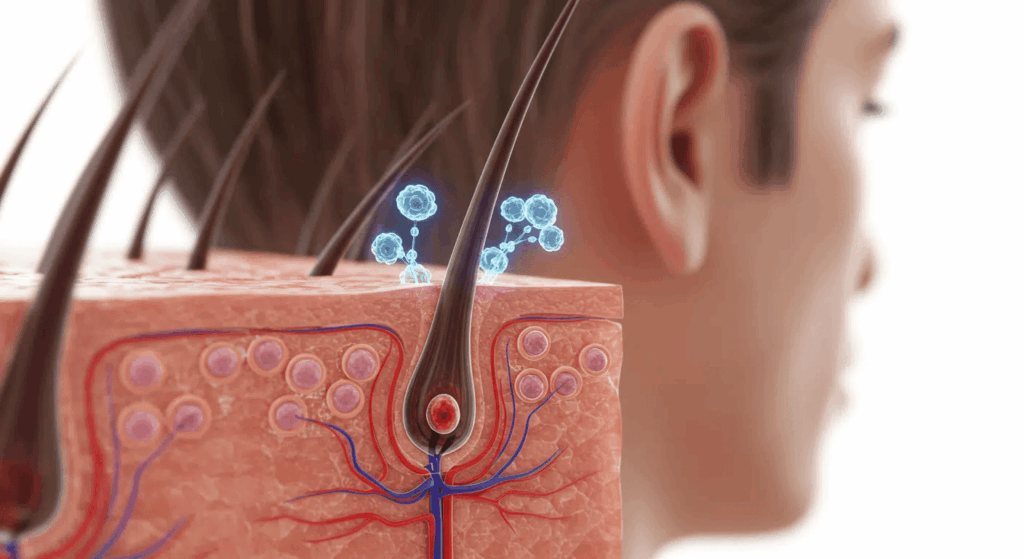
Regenerative medicine breakthroughs: 7 Elite Innovations for Mastering Hair Regrowth Success In the modern clinical era, the management of hair and scalp disorders has moved significantly beyond the traditional reliance on simple topical applications and generic supplements. We are currently witnessing a biological revolution where the focus is shifting toward the activation of the body’s innate cellular intelligence. These Regenerative medicine breakthroughs are redefining the possibilities for patients suffering from thinning hair and scalp atrophy, offering a path toward structural restoration rather than just symptomatic camouflage. Prof. Roland Tomb stands at the forefront of this scientific shift in the Middle East. As a world-renowned physician-scientist and an active Dermatology researcher Lebanon, he integrates his vast knowledge of metabolism, cancer biology, and bioethics into the field of trichology. This blog explores how recent Regenerative medicine breakthroughs are being applied to provide the most advanced Hair loss treatment Lebanon has to offer, focusing on the elite innovations that ensure sustainable clinical success. 1. The Foundation of Follicular Biology Research To treat hair loss effectively, one must first understand the complex micro-environment of the hair follicle. The follicle is a dynamic organ that undergoes continuous cycles of growth (anagen), regression (catagen), and rest (telogen). Recent Follicular biology research has highlighted the critical role of the “bulge” region, where multipotent stem cells reside. These cells are responsible for regenerating the entire follicle in every new growth cycle. Prof. Roland Tomb emphasizes that any successful Hair regrowth science must target these stem cell populations. Through extensive Follicular biology research, clinicians have identified that the communication between the dermal papilla and the overlying epithelium is governed by complex signaling pathways, such as the Wnt/beta-catenin pathway. By understanding these molecular triggers, Regenerative medicine breakthroughs allow us to restart the growth cycle in follicles that have prematurely entered a dormant state. This deep dive into Follicular biology research is what differentiates a standard clinic from a high-level research facility. 2. Platelet-Rich Plasma Skin Research and Growth Factors One of the most widely recognized Regenerative medicine breakthroughs in recent years is the refinement of Platelet-Rich Plasma (PRP). However, not all PRP is created equal. Platelet-Rich Plasma skin research has shown that the concentration of platelets, the presence or absence of leukocytes, and the activation method significantly impact the therapeutic outcome. In the context of Hair loss treatment Lebanon, Prof. Tomb utilizes hospital-grade centrifugation to ensure a high concentration of Autologous growth factors. The use of Autologous growth factors substances derived from the patient’s own blood ensures absolute biocompatibility and eliminates the risk of allergic reactions. These Autologous growth factors, including VEGF (Vascular Endothelial Growth Factor) and PDGF (Platelet-Derived Growth Factor), act as biological “fertilizers” for the scalp. By applying the latest findings from Platelet-Rich Plasma skin research, clinicians can stimulate angiogenesis (new blood vessel formation) around the follicle, providing the nutrients necessary for robust hair production. This application of Autologous growth factors remains a cornerstone of elite Hair regrowth science. 3. Stem Cell Therapy for Skin and Follicular Repair The most profound of the Regenerative medicine breakthroughs involves the direct utilization of cellular therapies. Stem cell therapy for skin and hair restoration focuses on harvesting undifferentiated cells that can either differentiate into follicular cells or secrete powerful paracrine signals that rejuvenate the existing tissue. This is the “holy grail” of Advanced tissue repair Lebanon. Prof. Roland Tomb monitors the global evolution of Stem cell therapy for skin, ensuring that his patients have access to protocols that are both safe and effective. By utilizing adipose-derived or follicle-derived stem cells, Stem cell therapy for skin can reverse the “miniaturization” of follicles seen in androgenetic alopecia. This is a vital component of Advanced tissue repair Lebanon, as it addresses the structural atrophy of the scalp. For those seeking a definitive solution, Stem cell therapy for skin offers a biological reset that traditional medications cannot match. 4. Mastering Alopecia Areata Management Alopecia areata is an autoimmune condition where the body’s own defense system attacks the hair follicles. Managing this condition requires more than just stimulation; it requires immunological modulation. Alopecia areata management has been transformed by Regenerative medicine breakthroughs that focus on restoring immune privilege to the follicle. Prof. Roland Tomb utilizes a combination of traditional and regenerative approaches to achieve stability and regrowth. In the context of Alopecia areata management, the use of JAK inhibitors and local biostimulators has shown great promise. Furthermore, Alopecia areata management in Prof. Tomb’s clinic is informed by his research into systemic inflammation and bioethics. By calming the inflammatory environment while simultaneously using Autologous growth factors to encourage repair, he provides a dual-action strategy for Alopecia areata management. This comprehensive approach is what makes him a leading Dermatology researcher Lebanon. 5. Telogen Effluvium Solutions: Addressing the Metabolic Link Telogen effluvium is a form of temporary hair loss that often follows a systemic shock, such as high fever, severe stress, or nutritional deficiency. Developing effective Telogen effluvium solutions requires a deep understanding of Metabolic skin health. As a researcher in metabolism, Prof. Roland Tomb looks for the underlying nutritional and hormonal imbalances that cause the hair to prematurely enter the shedding phase. Modern Telogen effluvium solutions involve more than just iron supplements. They include the use of metabolic regulators and Regenerative medicine breakthroughs that shorten the telogen phase and accelerate the return to anagen. By optimizing Metabolic skin health, Prof. Tomb ensures that the scalp has the energetic resources needed to support hair production. These Telogen effluvium solutions provide a roadmap for long-term hair density, proving that Metabolic skin health is the foundation of any successful Hair regrowth science. 6. Chronic Wound Healing Beirut and Advanced Tissue Repair The principles of regeneration that govern hair regrowth are the same as those that govern Chronic wound healing Beirut. The scalp is essentially a complex tissue system, and when it is damaged by age or disease, it requires Advanced tissue repair Lebanon. Prof. Roland Tomb’s work in Chronic wound healing Beirut has provided him with unique insights into how